October is Breast Cancer Awareness Month, a time when breast cancer survivors across the Nation celebrate how far they have come. For many women, radiation was one of the last steps in treatment. The red, irritated skin that came with it faded within a few weeks, and life moved forward.
Then, months or even years later, a small sore appears near the lumpectomy scar or under the breast and refuses to close. A delayed wound like this can be a sign of soft tissue radionecrosis, a condition caused by a slow loss of blood supply in tissue that received radiation. Fortunately, hyperbaric oxygen therapy (HBOT) offers a noninvasive way to help this tissue heal. In a recent study, 85% of breast cancer patients treated with HBOT for late radiation tissue injury reported improvement in their symptoms.
Read on to learn more about soft tissue radionecrosis and where to find care for radiation injury after breast cancer treatment in Sandy Springs, GA.
How Can a Wound Open Years After Breast Cancer Radiation?
Localized skin reactions during radiation treatment are a common side effect, and they usually heal on their own after treatment ends. A delay in radiation-damaged tissue can develop weeks, months, and even years after treatment ends. This happens when radiation scars the tiny blood vessels under the skin, and that damage keeps progressing after treatment ends. Over time, the treated area receives less blood and oxygen than healthy tissue does. The skin may look normal, yet it has very little reserve for healing. A minor scrape, a biopsy, friction from a bra band, or an infection can open a wound that the tissue cannot close on its own.
Where Can Delayed Radiation Wounds Show Up on the Breast and Chest?
Non-healing wounds after radiation, also known as delayed radiation injury, tend to form where radiation was strongest or where the skin experiences the most pressure and moisture. Common spots include:
- The lumpectomy scar or the tissue around it
- Chest wall wounds after a mastectomy
- Breast fold wounds, where skin rubs and stays damp
- Armpit wounds, especially after radiation to the lymph nodes
- Skin over a breast implant or reconstructed breast
Some women also notice firm, tender areas inside the breast that slowly break down and open over time.
What Are the Symptoms of Soft Tissue Radionecrosis?
A wound in a treated area deserves a closer look when it:
- Stays open for several weeks with no progress
- Grows deeper or wider
- Drains fluid or develops an odor
- Bleeds easily when touched
- Hurts more than you would expect for its size
- Sits on skin that feels hard and tight or shows small, spidery red blood vessels
These signs can also come from an infection or a cancer recurrence, so your oncologist should check any new wound first. Once those causes are ruled out, women dealing with soft tissue radionecrosis in Sandy Springs can move forward with a wound and hyperbaric evaluation.
What Happens During a Wound Care Evaluation for Soft Tissue Radionecrosis?
Comprehensive wound care can include surgical debridement to remove dead tissue, specialized dressings, or negative pressure wound therapy, which uses gentle suction to draw out fluid and support healing. Clearing away damaged tissue gives healthy tissue room to grow once oxygen levels improve. Before any treatment, your first visit with a wound care specialist focuses on your medical history and current health. This wound evaluation usually includes:
- Reviewing your cancer history, including when and where you received radiation
- Examining the wound and measuring its size and depth
- Checking for infection and taking a culture if needed
- Looking at how well blood and oxygen reach the surrounding skin
- Confirming with your oncologist that cancer recurrence has been ruled out
- Building a plan that combines wound care and HBOT when appropriate
How Does the Best Hyperbaric Oxygen Therapy in Sandy Springs Help Heal Soft Tissue Radionecrosis?
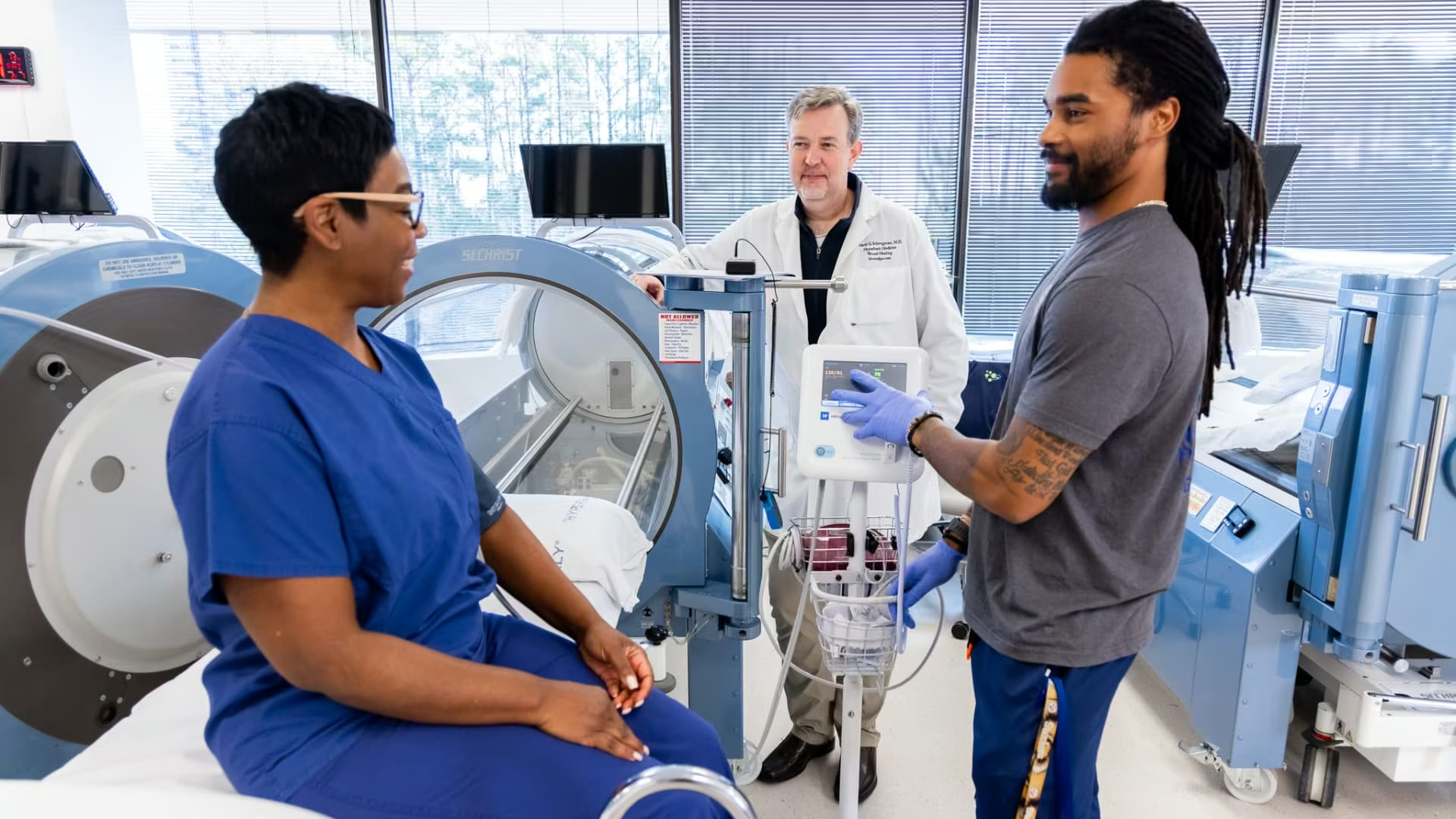
Hyperbaric oxygen therapy goes after the root cause of a radiation wound by bringing oxygen back to starved tissue. During each session, you rest in a pressurized chamber and breathe 99.7% medical-grade oxygen. The added pressure lets your blood carry far more oxygen than usual, which prompts your body to grow new blood vessels in the damaged area. A typical treatment regimen includes:
- One session a day, five days a week
- About 30 to 45 sessions total, depending on how the wound responds
- Regular wound checks so your care team can track progress
Where to Find Care for Radiation Injury After Breast Cancer Treatment in Sandy Springs
A breast wound that will not heal after radiation can lead to more serious complications if not treated, and getting early care gives the tissue its best chance to recover. Hyperbaric Physicians of Georgia has treated late radiation injuries in Metro Atlanta since 1993. Our Sandy Springs Medical Director, Dr. Daniel J. Beless, MD, FACCWS, FACEP, UHM/ABPM, has been part of our team since 1998. He is board-certified in emergency medicine, subspecialty board-certified in undersea and hyperbaric medicine, and a fellow of the American College of Certified Wound Specialists. He previously directed the hyperbaric medicine unit at Crawford Long Hospital and continues to teach Emory University medical students and residents about hyperbaric medicine and advanced wound care.
Our Sandy Springs team combines physician-led wound care with HBOT in hard-sided chambers that deliver 99.7% medical-grade oxygen, and we keep your oncologist and breast surgeon involved every step of the way. Patients come to us from across Metro Atlanta, North Georgia, and across the Nation because we have been accredited with distinction by the Undersea and Hyperbaric Medical Society (UHMS) since 2017 and have maintained a 100% safety record since our beginning in 1993.
Ready to speak with a knowledgeable hyperbaric physician about the best radiation injury treatment after breast cancer in Sandy Springs, GA?