

.svg)


.svg)


For thousands of people every year, sudden hearing loss is the first sign of Idiopathic Sudden Sensorineural Hearing Loss (ISSNHL). This condition starts with a rapid, unexplained drop in hearing of at least 30 decibels across three or more sound frequencies, occurring within 72 hours and lasting at least three days, with no identifiable cause in the vast majority of cases. Research reveals that there are between five and 20 cases per 100,000 people every year, and because many people dismiss the symptoms as a clogged ear or sinus pressure, countless cases go undiagnosed until the window for effective treatment has closed.
Whether you’ve recently been diagnosed with ISSNHL or you’ve been looking for treatment for a while, advanced treatment options exist, including hyperbaric oxygen therapy. In fact, HBOT is FDA-recognized specifically for this ISSNHL treatment.
Continue reading to learn more about ISSNHL, how HBOT works to support hearing recovery, and what to expect when you choose the best hyperbaric oxygen therapy in Cumming, GA, for treatment.
What Is Idiopathic Sudden Sensorineural Hearing Loss (ISSNHL)
ISSNHL goes by a few names: sudden deafness, sudden hearing loss, sudden-onset SSHL. But the experience is the same, no matter what it is called. Symptoms often include:
- Sudden drop in hearing upon waking
- Feeling of fullness or pressure in the ear
- Dizziness
- Ringing in the ears, known as tinnitus
The hearing loss can happen all at once or come on gradually over hours, with sounds growing muffled and faint. For many people, the first instinct is to blame a clogged ear or a cold, which is exactly why so many cases go untreated for too long.
When looking for a cause, doctors often cannot point to one. While bacterial or viral infections, autoimmune conditions, trauma, and metabolic disorders like diabetes are all possible contributors, the leading theories in cases with no clear cause center on:
- Vascular compromise or reduced blood flow to the cochlea
- A rupture of the cochlear membrane, also known as a ruptured eardrum
- An unidentified viral infection
More than 90% of cases are classified as idiopathic, meaning no underlying cause is ever found, and between 32% and 62% of cases end up resolving on their own. Unfortunately, the cases that do not recover on their own can result in permanent hearing loss, and the treatment options that exist work best when started quickly.
How Does HBOT Work for Sudden Hearing Loss?
To understand how hyperbaric oxygen therapy is useful for treating sudden hearing loss, it helps to understand what is happening inside the ear during an ISSNHL event. The inner ear, specifically a fluid-filled, snail-shaped structure called the cochlea, is packed with tiny hair cells that convert sound vibrations into nerve signals that the brain can read. Those hair cells are extremely sensitive to oxygen levels, and when blood flow to the cochlea is reduced or cut off, those cells begin to suffer.
Because some cases of ISSNHL are tied to impaired blood flow to the inner ear, HBOT works by delivering additional oxygen directly to those damaged tissues while the patient breathes pure oxygen inside a pressurized chamber.
The therapy works on two levels at the same time:
- The increased pressure inside the hyperbaric chamber helps reduce swelling in the inner ear structures
- The elevated oxygen levels in the bloodstream support the repair of the auditory nerve structures that are critical to hearing recovery
Beyond oxygen delivery, HBOT has also been shown to help reduce swelling, promote stem cell growth, and aid in fighting bacteria and infections that may be affecting the inner ear.
Why Timing is Important for ISSNHL Treatment
The inner ear does not have a long tolerance for oxygen deprivation, and every day that passes without treatment narrows the window for meaningful recovery. The best chances for hearing recovery occur when HBOT is started within the first 48 hours of symptom onset. After two weeks, the chances for a successful outcome begin to drop, though some clinics will still treat patients up to three months out, depending on the individual case. Research has found that patients are frequently not informed about HBOT in a timely way, and many are referred only after other treatments have already failed. This is a pattern that undercuts the therapy's effectiveness, since it works best when started promptly rather than used as a last resort.
What to Expect During an HBOT Treatment for ISSNHL
Knowing what to expect ahead of your hyperbaric oxygen therapy treatment can make a real difference in how comfortable you feel:
- Before your first session, a physician will review your medical history, current medications, and overall health to confirm that HBOT is appropriate for you and to set a baseline for tracking your progress.
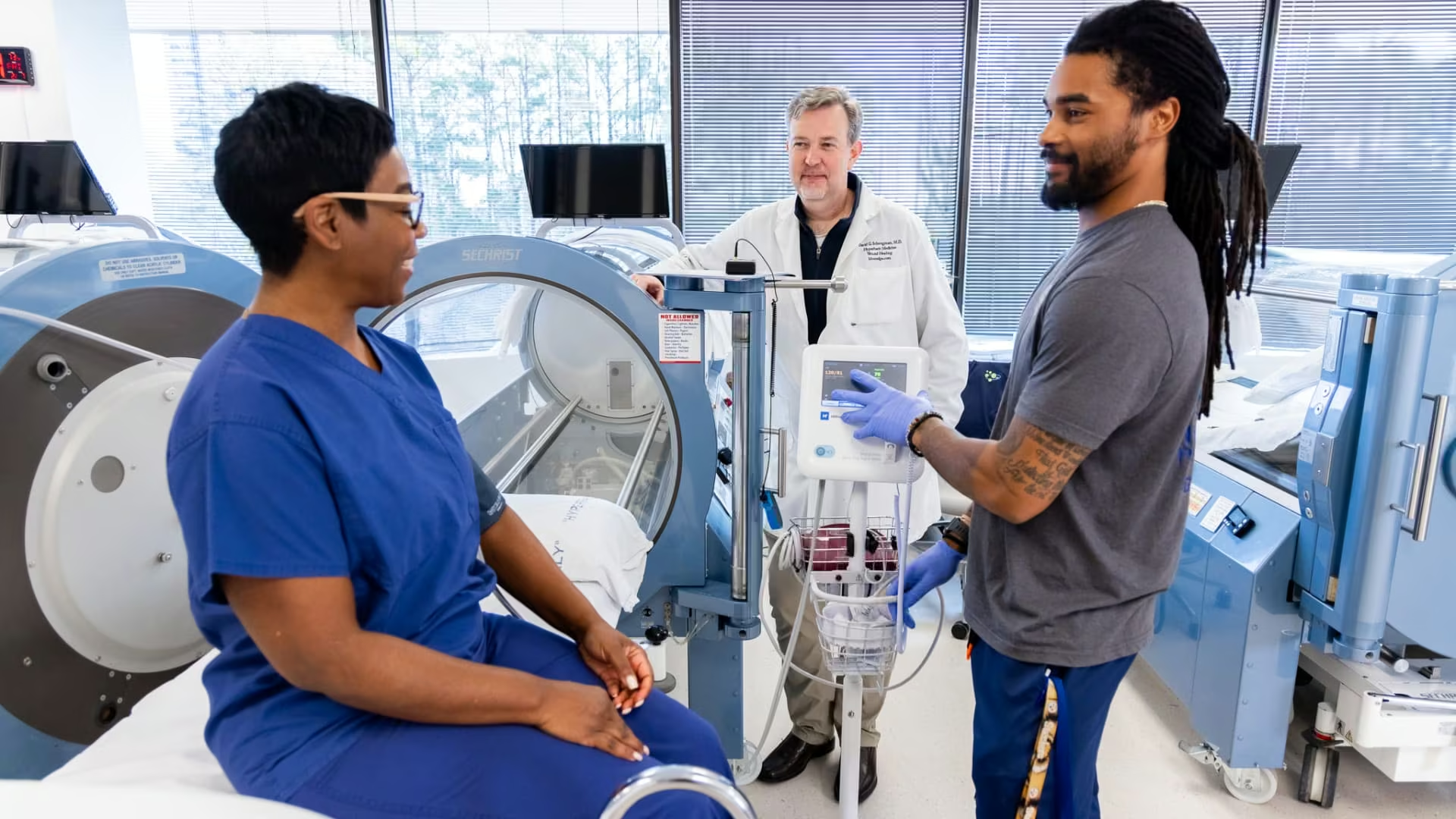
- Once cleared for treatment, you will settle in the hyperbaric chamber where the pressure inside will gradually increase to the prescribed level. That pressurization phase is the part most patients notice first. The most common side effect reported by patients with ISSNHL undergoing HBOT is pressure in the ears similar to a plane takeoff. This is generally mild and resolves on its own.
- Once pressurized, you breathe 99.7% medical-grade oxygen for the entirety of your session. Most people read, watch television, or sleep during their session, which typically lasts between 60 and 90 minutes. A full course of treatment generally involves 10 to 20 sessions, ideally completed on consecutive days for the best results.
- When the session ends, the chamber depressurizes gradually, and you are free to go about your day. There is no recovery time, no anesthesia, and no incisions.
Where to Find the Best Hyperbaric Oxygen Therapy in Cumming, GA for ISSNHL Treatment
With sudden hearing loss, minutes matter. The sooner you start treatment, the better chance you have for a successful outcome. Hyperbaric oxygen therapy, when combined with the right medical care, gives your inner ear its best chance to recover.
At Hyperbaric Physicians of Georgia, we treat ISSNHL with our physician-guided approach, which means every patient who walks through our doors is evaluated by a doctor who understands the biology of sudden hearing loss, the role oxygen plays in cochlear recovery, and how to build a treatment plan around your specific case. Our national accreditation and 100% perfect safety rating make our state-of-the-art facilities in Marietta, Cumming, and Sandy Springs the top choices for those across the nation.
Ready to get the best hyperbaric oxygen therapy in Cumming, GA, for unexplained hearing loss?


.svg)

.svg)
.svg)