

.svg)


.svg)
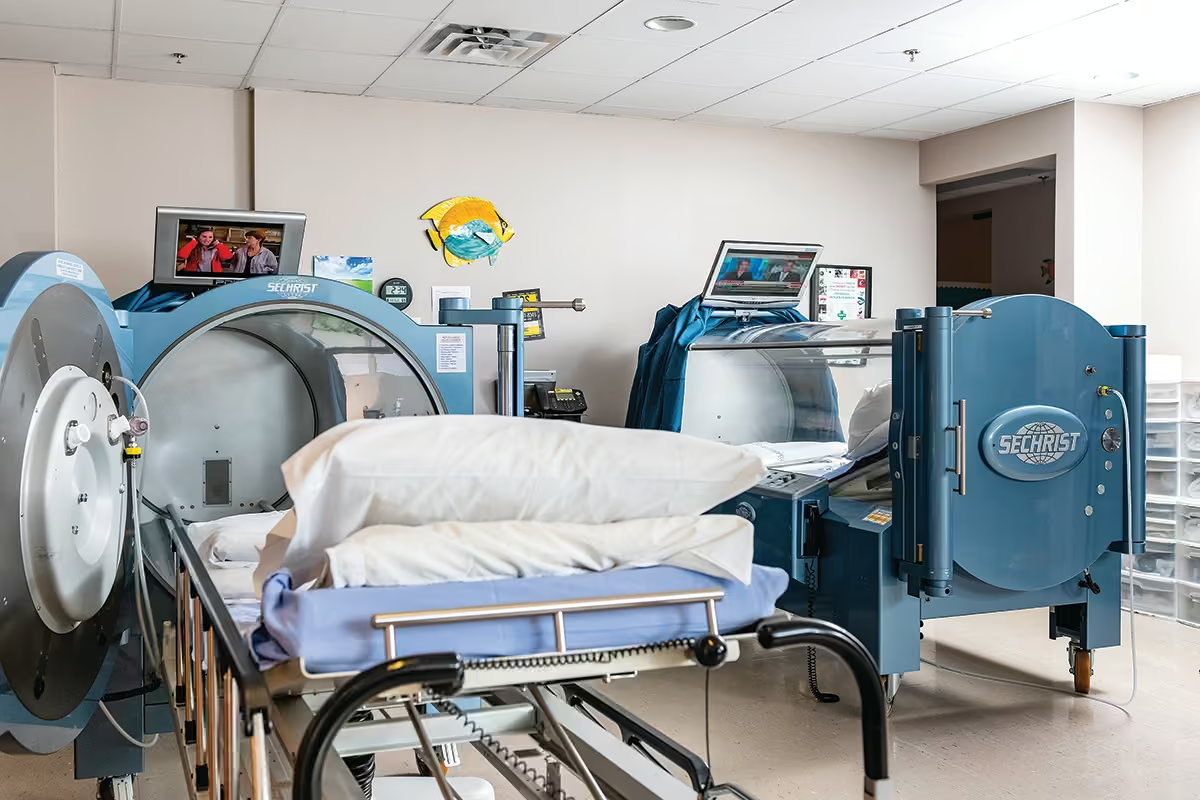

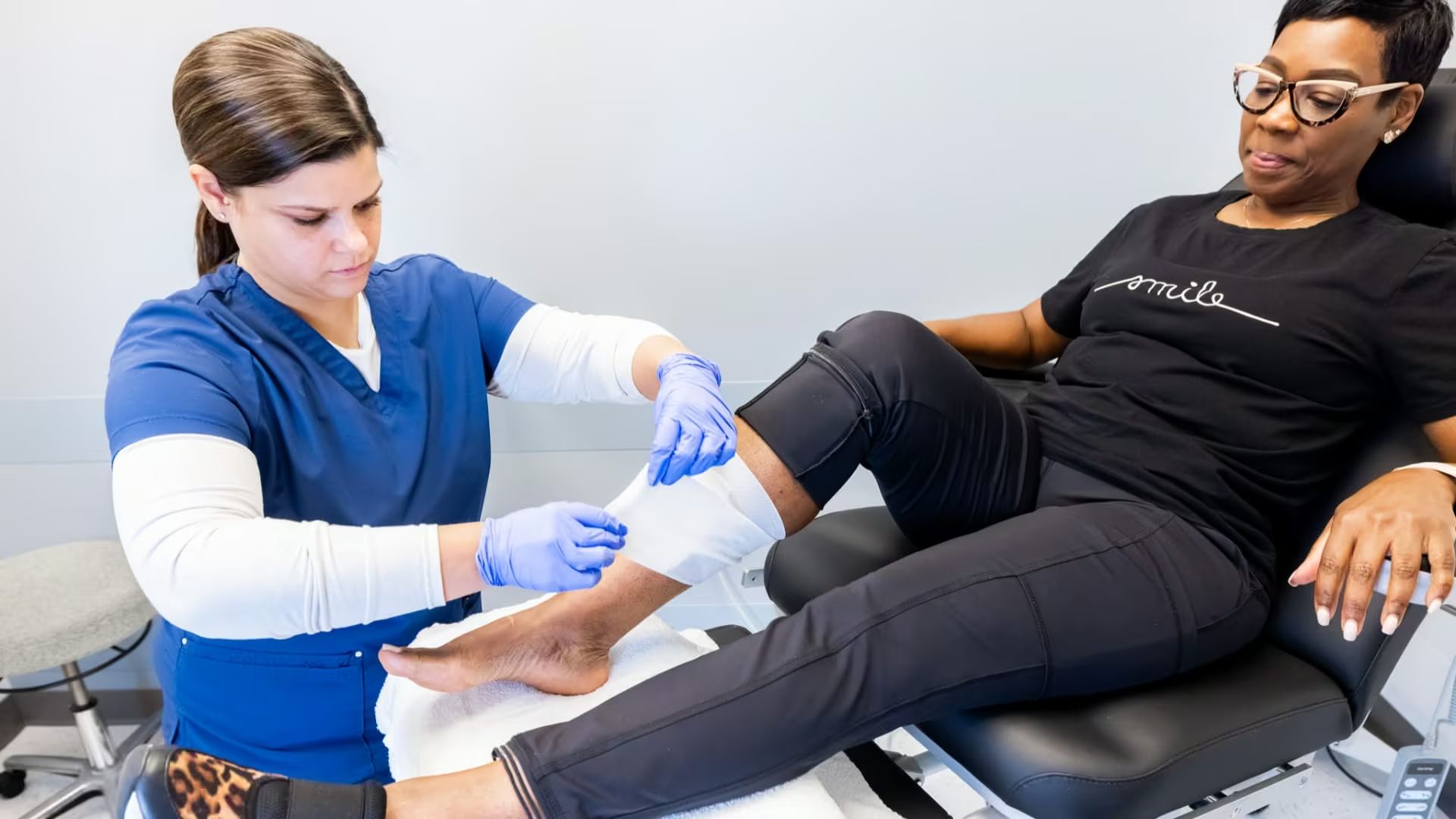
Large or chronic wounds usually require specialized care, like dressings, antibiotics, and wound vacs. But for some, even the most diligent wound care isn’t enough. One reason why some people need more than standard wound care is chronic inflammation. Underlying issues with blood flow, oxygen delivery, infection, pressure, blood sugar control, or the body’s inflammatory response can all affect inflammation levels. In most cases, hyperbaric oxygen therapy can help by delivering high concentrations of oxygen to tissues that struggle to heal.
Chronic wounds affect the daily life of nearly 2.5% of the United States population, with an even greater impact among older adults, who often have underlying medical conditions that affect blood flow and oxygen levels.
Read on to learn more about how hyperbaric oxygen therapy (HBOT) helps calm inflammation and restore adequate oxygen delivery to peripheral tissues, and where to find the best hyperbaric oxygen therapy in Cumming for slow-to-heal or non-healing wounds.
Why Does Chronic Inflammation Make Wounds Harder to Heal?
Inflammation is part of healing, but sometimes it can slow things down. To understand this better, it helps to know a little about how healing works. When you cut your skin, your immune system responds immediately. Blood vessels change, immune cells move into the area, and chemical signals help remove damaged tissue and fight potential infection.
While that early inflammatory response is useful, a problem can arise when the inflammatory phase continues for too long. Normally, healing includes inflammation, tissue formation, and remodeling. When that progression is disrupted, persistent inflammatory signaling can damage healthy cells and interfere with new tissue formation. The result can be a wound that appears to be constantly fighting the same battle.
What Can Cause a Wound to Become Inflamed?
Several things can prevent a wound from moving normally into the tissue-repair stage. Identifying the specific problem is important because it can change the course of your wound care treatment. Here are the top six ways a wound can struggle to heal:
1. Infection
This happens when bacteria keep the immune system activated and prevent normal tissue repair. Increasing redness, warmth, swelling, drainage, odor, or pain are all signs of an infected wound. More serious infections can also cause fever.
2. Poor Circulation And Low Oxygen
A wound needs oxygen for several reasons:
- Fibroblasts require oxygen to produce collagen
- New blood vessels depend on oxygen-sensitive processes
- Immune cells need adequate oxygen to help fight bacteria
If the tissue cannot receive enough oxygen through normal circulation, the biological machinery required for repair may not function efficiently. This is a huge reason a wound can remain open even when the wound itself is being treated appropriately.
3. Elevated Blood Sugar
Diabetes can interfere with several parts of wound healing, including immune function, circulation, and tissue repair. Blood sugar management, pressure relief, infection treatment, circulation assessment, and specialized wound care are all important.
4. Repeated Pressure Or Trauma
A wound cannot heal properly if the tissue keeps getting injured. Pressure from ill-fitting footwear, prolonged sitting, or walking on an injured area can repeatedly reopen tissue before it has a chance to repair.
5. Dead or Damaged Tissue
Tissue necrosis, or tissue that has died from lack of oxygen, can interfere with healing and can also provide an environment where bacteria can thrive. Depending on the wound, debridement may be necessary to remove tissue that the body cannot repair.
6. Radiation-Damaged Tissue
Radiation can permanently alter the small blood vessels and connective tissues in the affected area. Even years after radiation treatment, former cancer patients can develop tissue that is poorly oxygenated and difficult to repair. HBOT is an evidence-based treatment option for many cases of delayed radiation tissue injury.
How Does Hyperbaric Oxygen Therapy Help a Wound That Is Not Healing?
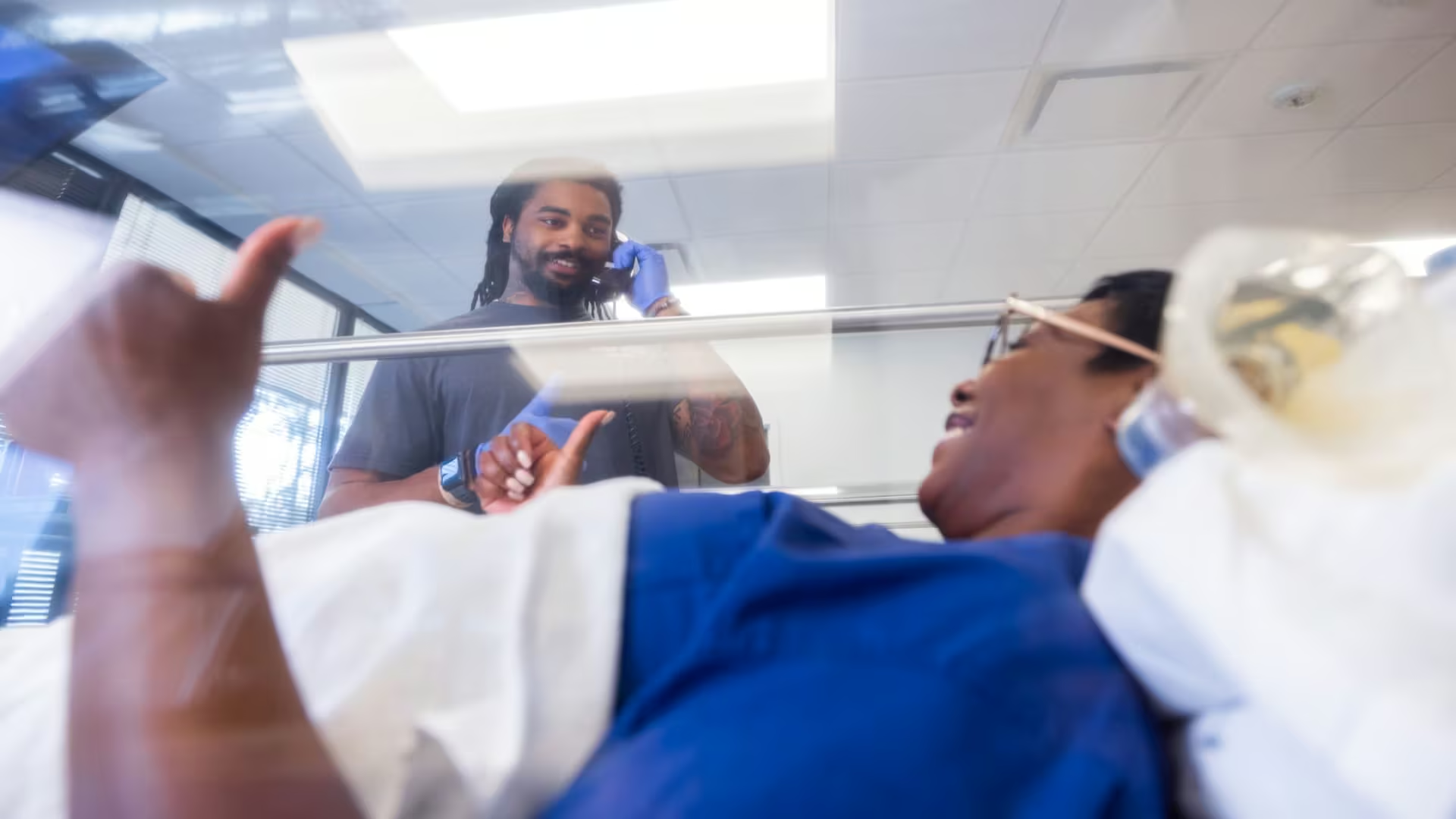
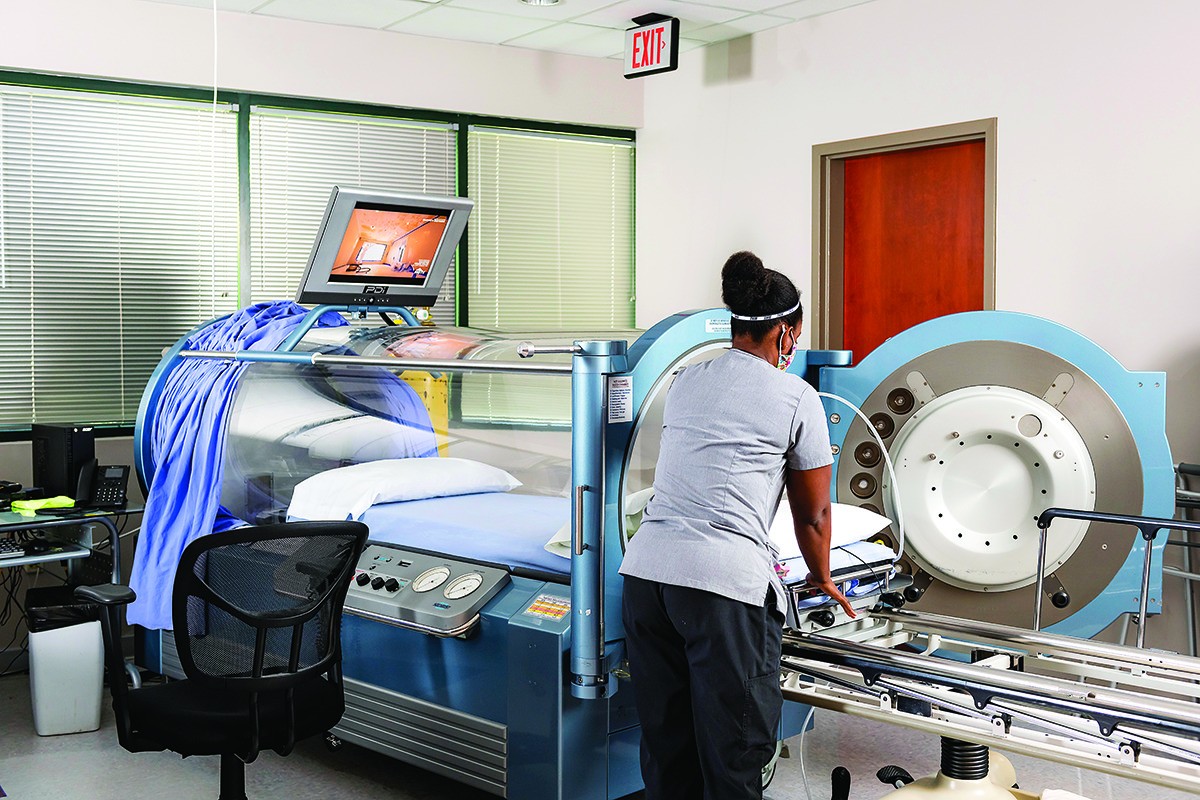
Hyperbaric oxygen therapy works by breathing medical-grade oxygen inside a chamber where the pressure is increased above normal atmospheric pressure. The combination of increased pressure and high oxygen concentration allows substantially more oxygen to reach the body's tissues. For a wound with inadequate oxygen availability, that temporary increase can have several important effects:
- Improving oxygen availability: Increasing tissue oxygen availability can support fibroblast activity, collagen production, angiogenesis, and the function of immune cells.
- Influencing the inflammatory response: Inflammation is controlled through a complex network of chemical signals. HBOT can influence inflammatory cytokines and other signaling pathways involved in prolonged inflammation.
- Supporting the body's defense against infection: Adequate oxygen is important for certain immune cells that help destroy bacteria. Hyperbaric oxygen can temporarily increase tissue oxygen levels and may also improve the activity of some antibiotics in specific circumstances.
- Helping new blood vessel formation: Healing requires the development of new blood vessels and connective tissue. HBOT can help increase markers associated with angiogenesis and tissue repair.
Who Should Consider Hyperbaric Oxygen Therapy for Chronic Wound Healing?
HBOT works best when it is integrated into a thoughtful treatment plan that includes comprehensive wound care. The only way to get this level of care is with physicians and specialists who understand both treatment options.
Wounds that respond best to HBOT include: diabetic foot wounds, delayed radiation tissue injuries, compromised grafts or flaps, and bone infections. To know if HBOT is right for you, a wound care specialist will consider:
- How long the wound has been present
- Whether the wound is getting smaller
- Blood flow to the affected area
- Signs of infection
- Blood sugar control
- Previous wound treatments
- Pressure or repeated trauma
- Tissue oxygenation
- Previous radiation exposure
- Other medical conditions and medications
- Whether your condition meets accepted criteria for HBOT
Where to Find the Best Wound Care Specialists in Cumming
Persistent inflammation and underlying conditions that involve infection, poor circulation, pressure, diabetes, or damaged tissue can all lead to persistent wounds. Our team, led by President and Founder Dr. Helen Gelly, combines physician-directed wound care with hyperbaric oxygen therapy designed around each patient's medical needs.
As a UHMS-accredited facility with distinction since 2017, we focus on careful evaluation, appropriate treatment, and patient safety. Hyperbaric Physicians of Georgia provides advanced wound care and hyperbaric medicine at three convenient locations in Sandy Springs, Marietta, and Cumming.
Ready to get comprehensive wound care for non-healing wounds with help from the best hyperbaric oxygen therapy in Cumming?

.svg)
.svg)
.svg)
.svg)