

.svg)


.svg)


A bone infection occurs deep inside hard tissue where blood flow is scarce. This reduced circulation can make osteomyelitis, an infection of the bone or bone marrow, difficult to treat.
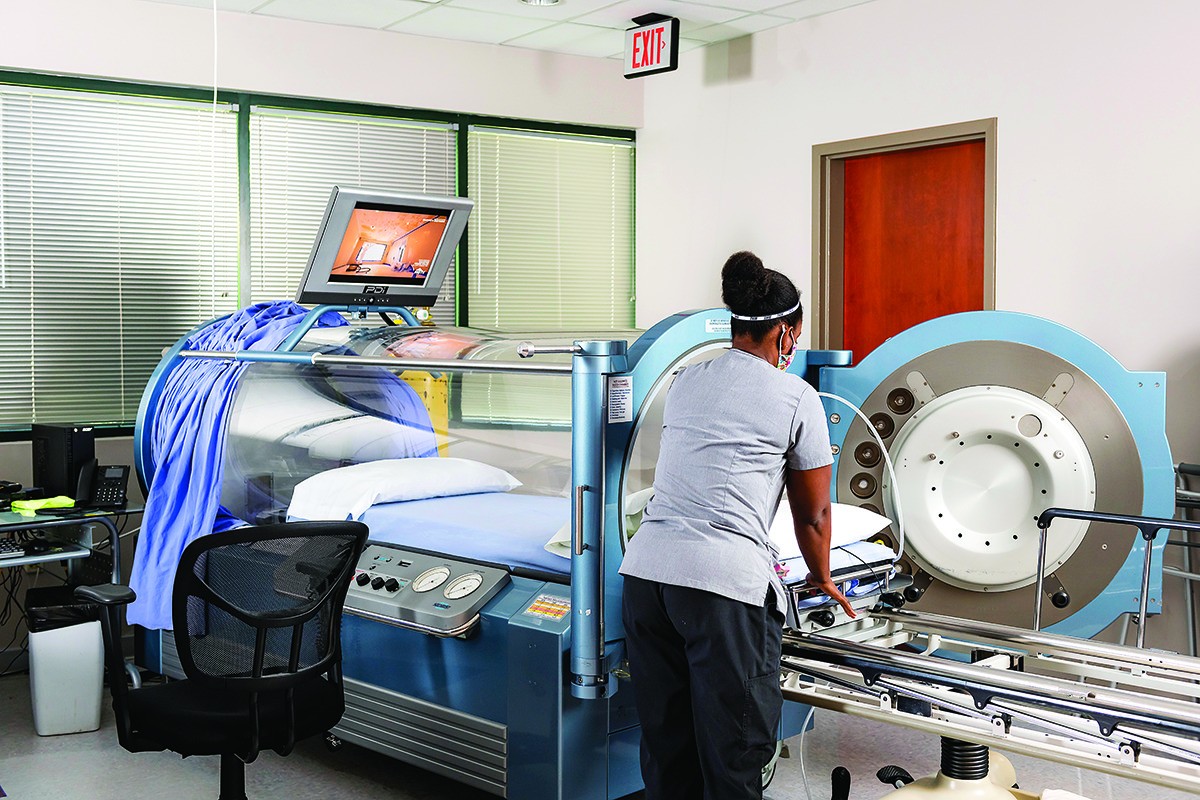
Along with standard treatment, such as surgery to clean out infected tissue and powerful IV antibiotics, improving blood flow can help. Hyperbaric oxygen therapy (HBOT) involves breathing 99.7% medical-grade oxygen inside a pressurized chamber, which floods oxygen-starved bone to assist with healing. Research shows that HBOT is associated with remission rates of 81% to 85% at two to three years in patients with chronic refractory osteomyelitis.
Continue reading to learn how HBOT can help with osteomyelitis treatment, if you’re a good candidate for HBOT, and where to find the best hyperbaric oxygen therapy in Sandy Springs to guide your treatment.
What is Osteomyelitis?
Bone infections are not like other infections. Most bacterial infections respond to antibiotics within days, but osteomyelitis is different. Osteomyelitis is an infection of the bone or bone marrow caused by bacteria or mycobacteria, and it is particularly difficult to treat because many antibiotics cannot penetrate bone well due to its limited blood supply.
Think of bone as a poorly irrigated field where water can reach the edges, but the center stays dry. When an infection takes hold deep inside the bone and antibiotics cannot fully eliminate it, the condition becomes chronic. Non-healing osteomyelitis happens in about 20% and 30% of all cases, and when standard treatments are struggling to fully heal the infections, additional therapies must be considered.
How Can Hyperbaric Oxygen Therapy Help Heal Bone Infections?
To understand why HBOT helps with osteomyelitis, it helps to understand what oxygen does inside an infected bone. When bacteria invade bone, they create an environment that is low in oxygen. That low-oxygen environment is actually a problem for your immune system, not just your tissue. Neutrophils, the white blood cells that act as your body's first responders, need oxygen levels to destroy bacteria through oxidative killing. HBOT for bone infections helps increase the oxygen levels inside infected bone, giving the immune system the fuel it needs to fight back.
Oxygen also improves how well antibiotics work. Active transport of antibiotics across bacterial cell walls requires adequate tissue oxygen, and studies have shown that combining antibiotics with HBOT produced a 100-fold greater reduction in bacterial counts than either treatment alone.
Beyond fighting the infection itself, HBOT also supports the body’s ability to repair itself by promoting the growth of new blood vessels, supports bone regeneration, and reduces local inflammation and swelling. That’s why hyperbaric oxygen therapy for osteomyelitis is often used as part of a broader treatment plan.
Who is a Good Candidate for Hyperbaric Oxygen Therapy?
Not every patient with osteomyelitis will need HBOT, but it can be a massive help when standard care has not worked to fully heal the infection. Chronic refractory osteomyelitis, or non-healing osteomyelitis, is defined as a chronic bone infection that persists or returns after appropriate treatment has already been attempted. HBOT is often recommended as a supplementary treatment for this condition.
Patients with certain health conditions are often the strongest candidates. Systemic conditions like diabetes, obesity, and peripheral vascular disease impair blood and antibiotic delivery through soft tissue and bone, making these patients especially likely to benefit from HBOT as an early addition to standard treatment protocols.
What to Expect During Hyperbaric Oxygen Treatment
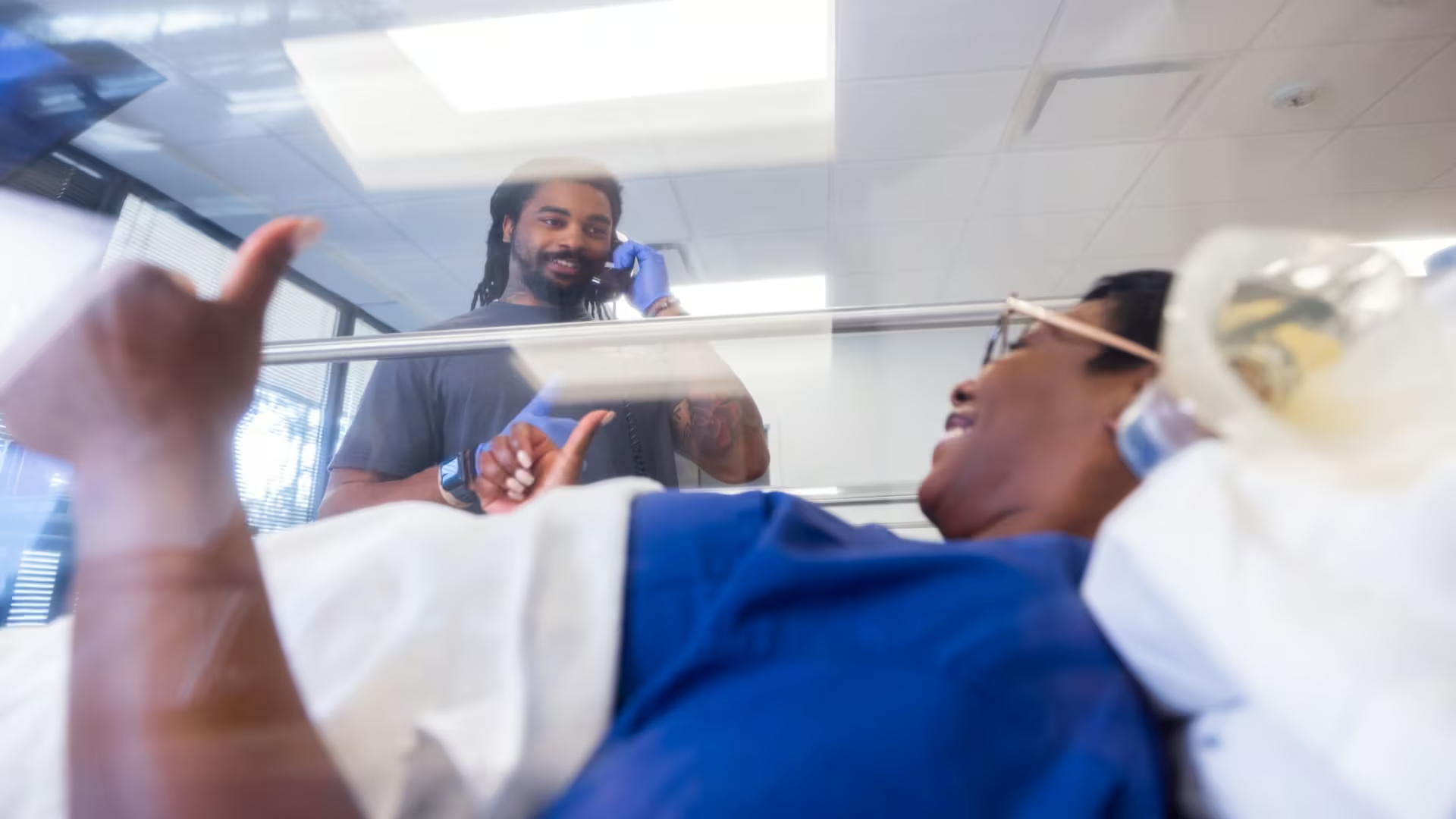
The idea of climbing into a pressurized chamber can feel intimidating, but most patients find the experience comfortable and relaxing once they begin. Each HBOT session typically lasts 90 to 120 minutes and is conducted five to six times per week, depending on physician recommendations. Most patients will require between 20 and 40 total sessions, depending on how the infection responds.
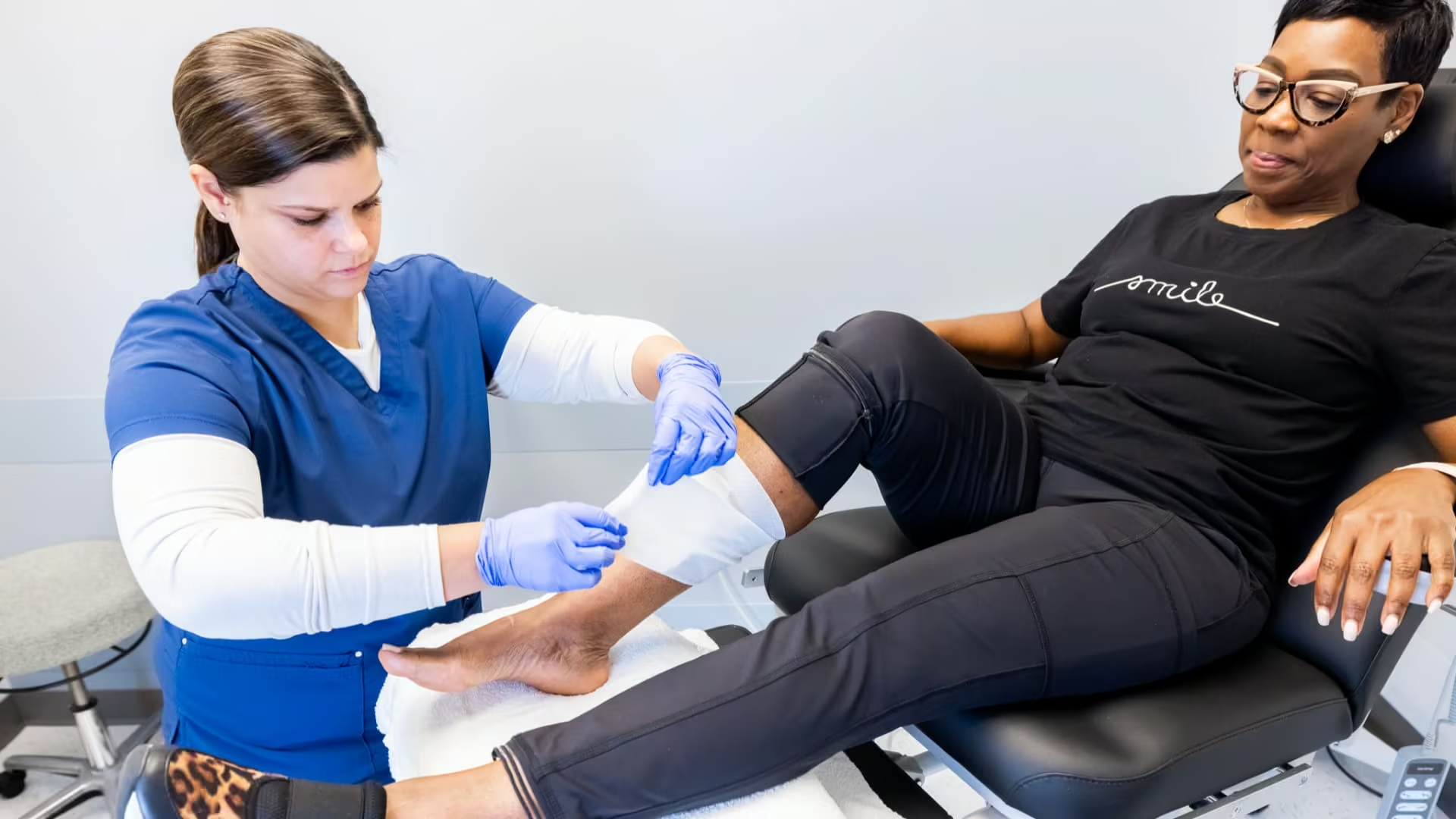
It’s important to understand that HBOT is always part of a larger plan, not a replacement for one. It works best alongside culture-directed antibiotics, surgical cleaning of infected tissue, and careful wound care. This is particularly important for patients managing diabetes or poor circulation.
Risks of Hyperbaric Oxygen Therapy for Osteomyelitis
Common side effects from HBOT are minor and temporary. They can include ear or sinus pressure during pressurization, similar to what you feel on an airplane, and occasional temporary blurring of vision. Serious complications like oxygen toxicity are rare and can be avoided by choosing an HBOT center that is managed by trained clinical staff during each session.
Discover the Best Hyperbaric Oxygen Therapy in Sandy Springs for Osteomyelitis Treatment
At Hyperbaric Physicians of Georgia, we treat patients with chronic refractory osteomyelitis using physician-supervised HBOT in a fully accredited clinic with a flawless safety record. Every treatment is overseen by a team of expert physicians. We are committed to providing a patient-centered experience where every protocol is grounded in current clinical evidence and safety.
Patients travel to our hyperbaric facilities in Marietta, Cumming, and Sandy Springs from across Metro Atlanta, North Georgia, and the entire United States because they want a clinic where accreditation, safety, and physician oversight are the foundation of care.
Ready to combat osteomyelitis with help from the best hyperbaric oxygen therapy in Sandy Springs?

.svg)
.svg)
.svg)
.svg)